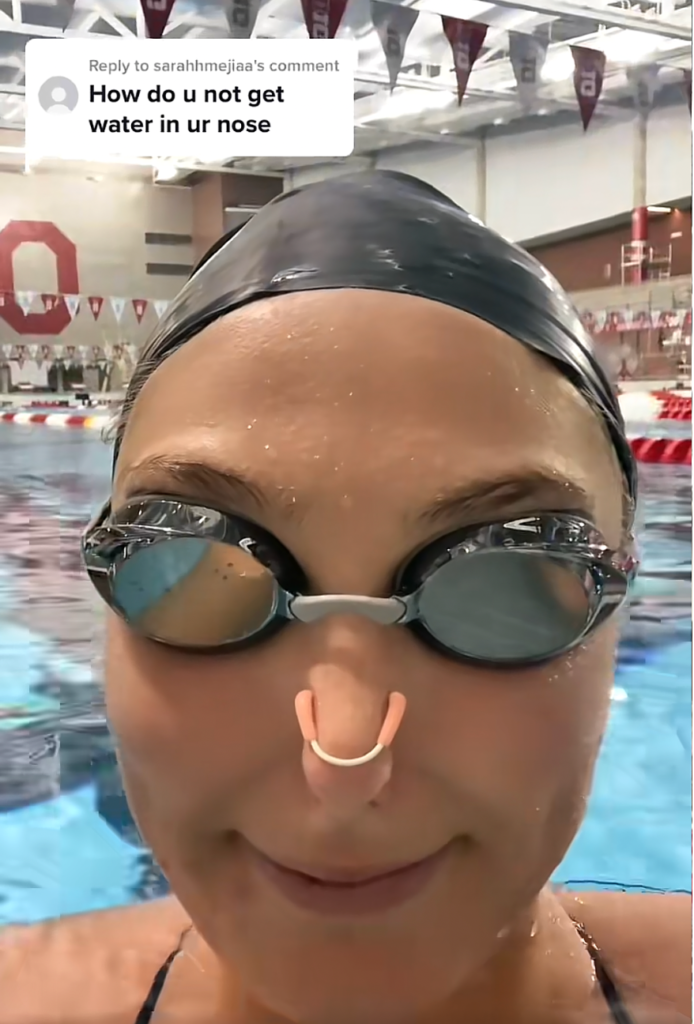
Image: Tiktok @nikkidzurko
Most people know that artistic swimmers wear noseclips to keep water out of their noses while swimming upside down. What many people don’t know is that there is a surprisingly large world of noseclips beyond the basic plastic ones you might find at your local sporting goods store. In artistic swimming, your noseclip can become an unexpectedly important piece of equipment. It has to stay securely on your nose through spins, lifts, underwater movements, and long routines, while remaining comfortable and discreet enough that the audience barely notices it.
Over time, different noseclips have developed their own reputations within the artistic swimming community. Some are inexpensive and easy to find, while others are prized by experienced swimmers despite being harder to purchase. They also vary in durability, some last for months, while others seem to break almost as soon as you put them on.
In this guide, I’ll break down some of the most common noseclips available in the US, from the beloved pink Laxto to the colorful plastic varieties that are especially popular with newer swimmers. I’ll be ranking each type based on Accessibility/Affordability, Aesthetics, and Durability on a scale of 1–5 stars, while also sharing my personal opinions as an artistic swimmer. Keep in mind that these rankings are based on my own experience and the preferences I’ve heard from other swimmers, so your mileage may vary!
The Pink One (Laxto)
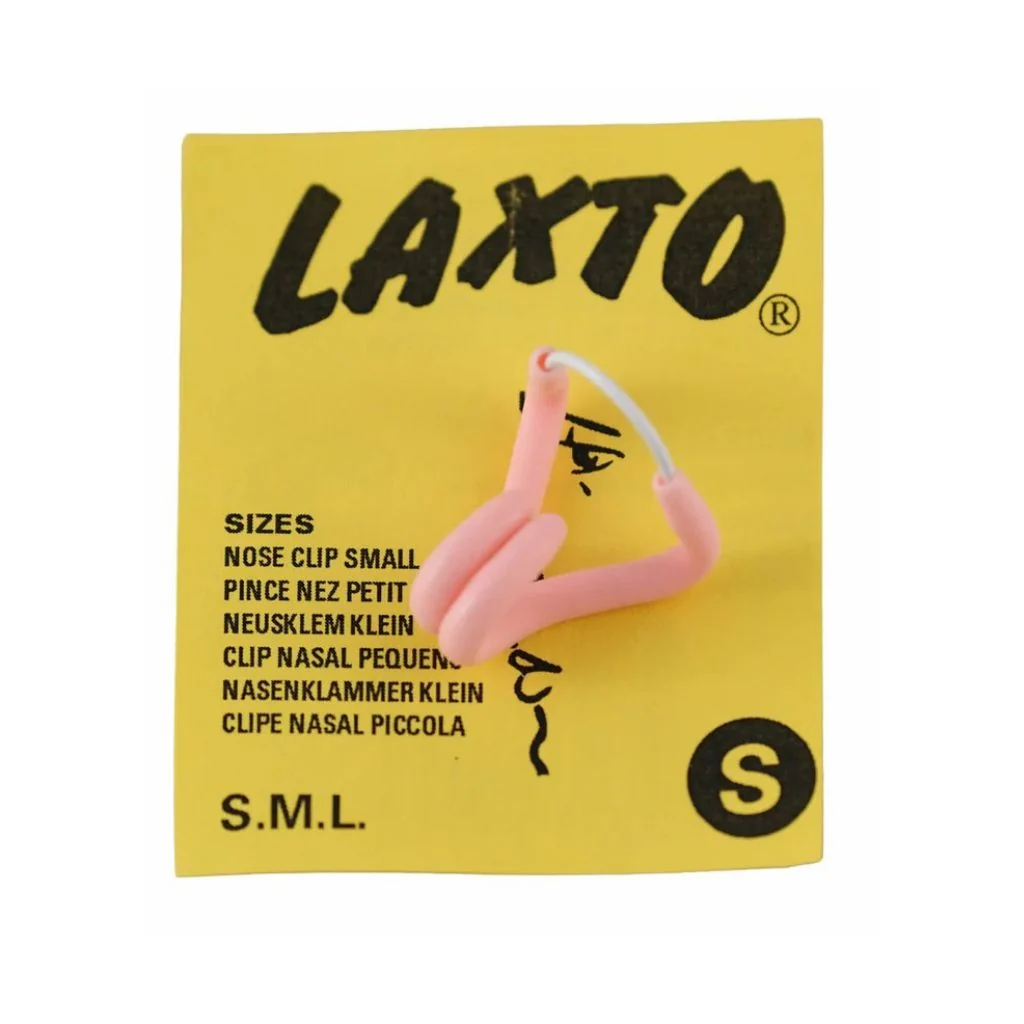
The pink noseclip is one of the most common—and most treasured—noseclips in the artistic swimming community. Made of metal with a pink rubber coating, this Laxto noseclip is a favorite among high-performance swimmers.
It lasts relatively long, usually about a full season on average. Sadly, its life typically ends when it gets too loose or, occasionally, snaps in half. The light pink color also blends surprisingly well with the skin tone of your nose, making it barely noticeable to spectators! For newer athletes, the tight metal frame can be a little uncomfortable at first, but it is generally easy to get used to.
The hooked ends are another convenient feature because they allow the noseclip to sit easily on your swimsuit when you’re not wearing it. Another perk is that they also come in several sizes—small, medium, and large—but small is by far the most commonly used, regardless of nose size.
The biggest downside of this noseclip is its price and accessibility. It is only available from a select few online websites, and many swimmers end up buying them directly from their coaches or other athletes. One tiny rubber-covered wire costs around $5, which is a little ridiculous considering that swimmers can go through as many as eight noseclips in a season. That’s $40 spent on noseclips alone!
Many of us, myself included, have tried to avoid this expense by going noseclip hunting on the bottom of the pool during competitions. So, I suppose the pink noseclip has also managed to develop an unhealthy culture of stealing.
Overall, Laxto pink noseclips are a prized commodity among high-performance artistic swimmers.
Accessibility/Affordability: ⭐
Aesthetics: ⭐⭐⭐⭐⭐
Durability: ⭐⭐⭐⭐
The Beige One
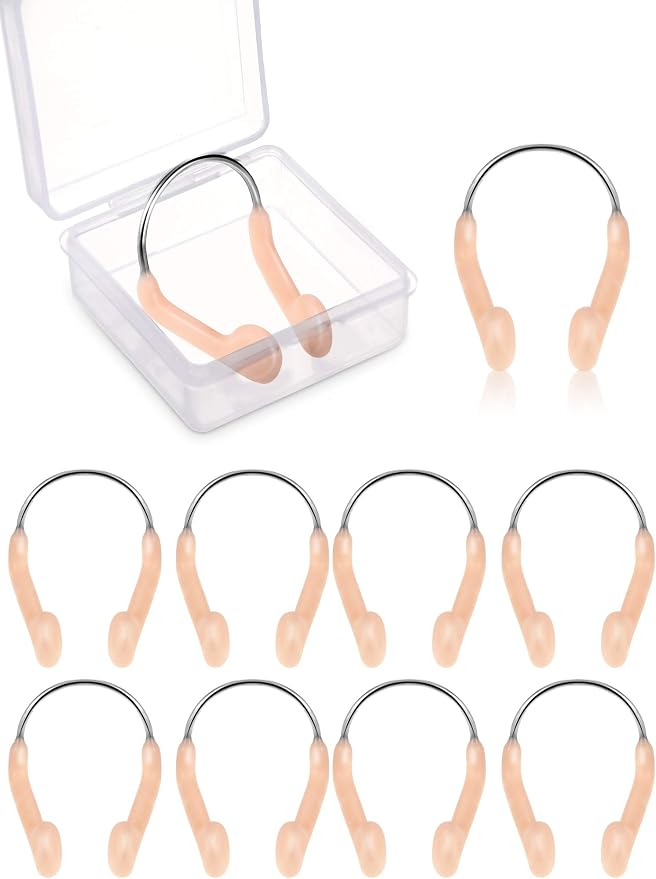
The beige noseclip is the other popular option for high-performance swimmers—and, in my humble opinion, the worse option. It is also extremely common in clubs around the US and shares many of the same qualities as the pink Laxto.
It lasts about the same amount of time, although it does tend to get loose a little faster. The beige color also provides a relatively seamless look and blends well with your skin tone. One thing it has going for it, however, is that the rubber grips slightly better on the skin than the plastic coating on the pink noseclip.
The downside is its shape. Unlike the pink noseclip, it isn’t as easy to hook onto your swimsuit when you’re not wearing it, which makes it slightly more annoying to keep track of.
Where the beige noseclip really wins, though, is accessibility and affordability. It is readily available on Amazon, where a pack of 12 costs only $9.99 as of 2026. No need to order from a questionable website or barter with your coach for a noseclip.
All in all, the beige noseclip is a much more accessible alternative to the pink one, although in the eyes of many high-performance swimmers, it remains the inferior option.
Accessibility/Affordability: ⭐⭐⭐⭐⭐
Aesthetics: ⭐⭐⭐⭐
Durability: ⭐⭐⭐
The Monstrocity
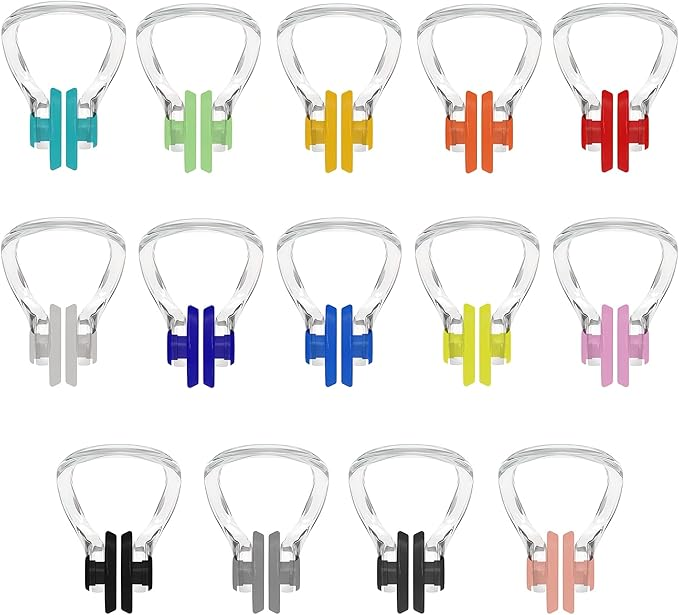
These colorful noseclips are becoming increasingly common among the newer generation of artistic swimmers. But, sorry to say, they are considered a monstrosity by many of the older swimmers.
Their bright colors are an eyesore to spectators, with little hope of blending into your skin tone. The plastic bridge will most likely last less than a couple of months before the inevitable happens: it snaps in half. It is extremely common to find pieces of these colorful noseclips littering the bottom of the pool or scattered around the pool deck because of how frequently they break.
The pads on the ends are comfortable on the nose, but they also come off surprisingly easily and can be a nuisance to reattach.
Despite all of this, these noseclips do have their advantages. They are comfortable, easy to see, inexpensive, and extremely accessible, which makes them particularly good for younger and newer swimmers. I would, however, strongly recommend switching to a more discreet and durable noseclip as you move toward a higher level of competition.
The reason these noseclips are so common among younger and newer swimmers is their price and accessibility. They cost only about $7 for a pack of 14 on Amazon, and they are sometimes even given out for free at entry-level programs as a beginner-friendly introduction to noseclips.
While these colorful plastic noseclips are easy to buy and use, the other types are generally preferred by higher-level swimmers. Once you reach a more competitive level, durability and discretion become much more important.
Accessibility/Affordability: ⭐⭐⭐⭐⭐
Aesthetics: ⭐
Durability: ⭐
The Rare Bird (Speedo)
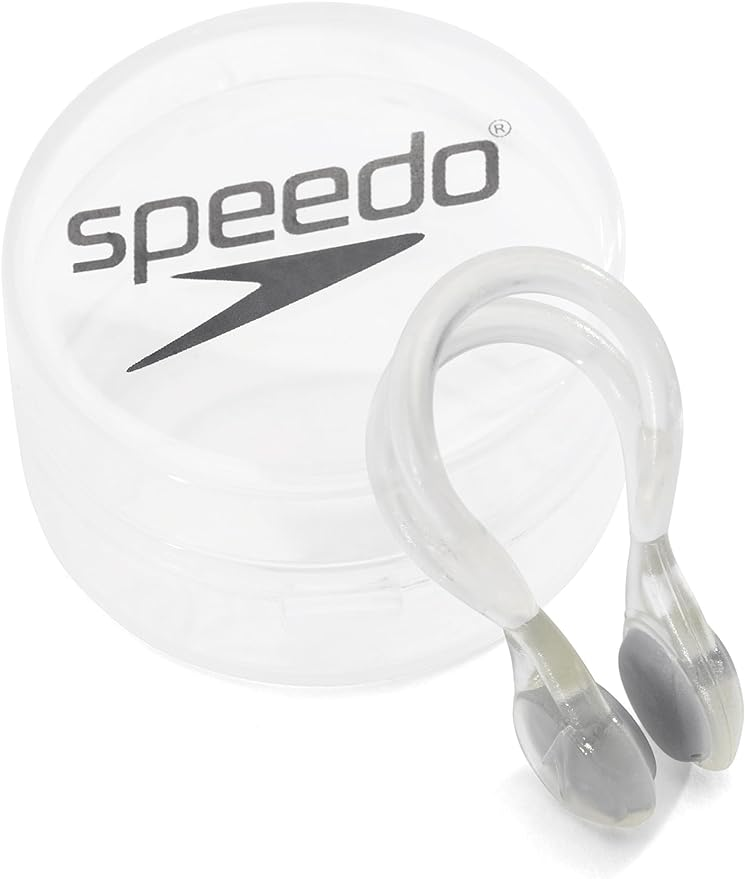
Speedo offers another noseclip option that is available on Amazon. These noseclips are more discreet than the Monstrocity, but unfortunately, they are just as flimsy.
They also cost roughly 15 times as much as the Monstrocity at nearly $7 each, while sharing many of the same qualities as the colorful plastic noseclips: they’re comfortable and relatively easy to use, making them suitable for entry-level swimmers. However, their short lifespan combined with their high price makes them difficult to justify for many experienced swimmers.
As a result, you don’t see these noseclips very often—which is why I’ve dubbed them The Rare Bird.
Accessibility/Affordability: ⭐⭐
Aesthetics: ⭐⭐⭐⭐
Durability: ⭐
The Other Amazon Options
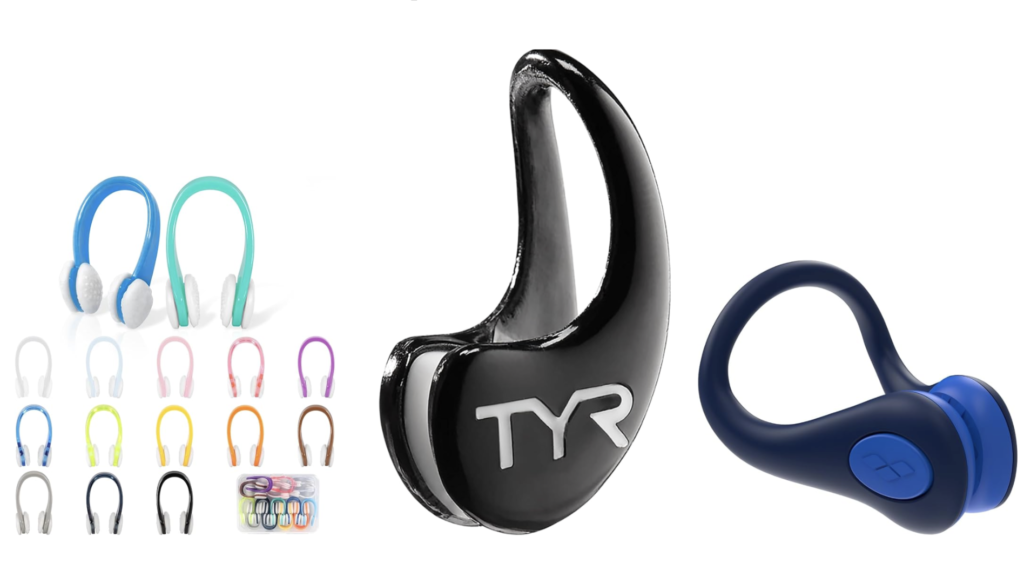
There are a few more noseclip options available on Amazon, including a U-shaped colorful noseclip (left), TYR (middle), and Arena (right).
These options are more discreet than the Monstrocity and only slightly more expensive, with the U-shaped noseclip being the most affordable. They also tend to offer more comfort and accessibility than the elite-level pink and beige noseclips, making them great options for entry-level swimmers.
However, just like the Monstrocity and Speedo noseclips, they aren’t necessarily the best choice once you reach a higher competitive level. At that point, it is worth making the switch to a more discreet and durable option.
That being said, I think these noseclips are some of the best choices for newcomers to the sport. I might be a little biased, though, since I started with the U-shaped noseclip myself!
Accessibility/Affordability: ⭐⭐⭐⭐⭐
Aesthetics: ⭐⭐
Durability: ⭐⭐
The Unicorn (No Noseclip)
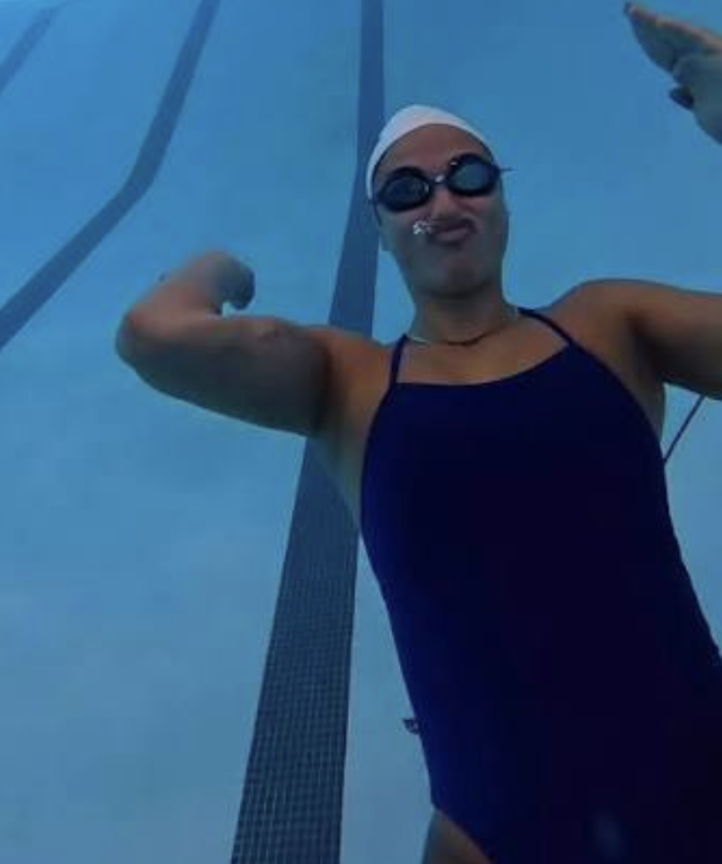
Image: instagram @daniellaaramirezzz
The rarest noseclip of them all: no noseclip whatsoever.
There are a select few artistic swimmers who have mastered the ability to swim upside down without a noseclip , earning them the title of “unicorns.” Among them are Olympians and current U.S. National Team members Daniella Ramirez and Anita Alvarez. While most artistic swimmers rely on a noseclip to keep water out of their noses during underwater elements, these athletes have developed the technique and control necessary to go without one.
Interestingly, there are a few different ways that unicorns manage this. Some swimmers scrunch their upper lip to help block their nostrils, while others don’t seem to do anything at all—they simply swim upside down without letting water enter their noses. Exactly how they do it remains one of the great mysteries of artistic swimming.
And, of course, this earns the Unicorn a perfect score across the board.
There is absolutely nothing to buy, nothing to lose, nothing to break, and nothing to remember to put on before getting in the pool. It also gets a perfect score for aesthetics because, well… there is literally nothing there. No bright pink wire, no beige rubber, no colorful plastic—just your nose.
Accessibility/Affordability: ⭐⭐⭐⭐⭐
Aesthetics: ⭐⭐⭐⭐⭐
Durability: ⭐⭐⭐⭐⭐
However, this is NOT recommended right off the bat for newer swimmers. One of the biggest mistakes beginners can make is assuming they don’t need a noseclip simply because water isn’t getting up their nose yet. Often, this is because they haven’t yet mastered being completely upside down underwater. Once you start doing more advanced movements and spending more time fully inverted, you may quickly discover why noseclips exist in the first place.
The Unicorn is something that should develop naturally with experience and technique, not something to force yourself into just because you want to ditch your noseclip. For most swimmers, especially those still learning the basics of underwater positions, the noseclip is there for a reason.
So, while the Unicorn may be the ultimate noseclip option, it is an extremely rare one. If you encounter a swimmer who can consistently perform difficult underwater elements without a noseclip, you have officially spotted a unicorn.
Conclusion
At the end of the day, there is no single noseclip that is perfect for every artistic swimmer. Your ideal noseclip depends on your experience level, comfort, budget, and how much you care about having a discreet look underwater. For newer swimmers, the colorful Amazon options are affordable, comfortable, and easy to find. As you progress, you may find yourself upgrading to the more durable and discreet pink or beige noseclips that are so beloved by high-performance swimmers.
And then, of course, there is the Unicorn—the elusive swimmer who has somehow transcended the need for a noseclip entirely.
Whether you’re proudly wearing a bright pink Laxto, relying on a $7 pack of colorful plastic noseclips, or hoping to one day join the ranks of the Unicorns, the most important thing is that your noseclip works for you. After all, artistic swimming is hard enough without having to worry about losing your noseclip halfway through a routine.
So choose your noseclip wisely, keep a spare (or five) in your swim bag, and whatever you do, don’t forget to check the bottom of the pool after a competition. You never know what treasures you might find.